

France Bans Ultra Fast Fashion Ads From January 1, 2027: What Leather Jacket Sellers Must Do
France will ban advertising for ultra fast fashion from January 1, 2027. Law No. 2026-602, enacted on July 8, 2026, writes a legal definition of "mode ultra-express" into the French environment code and attaches a sequence of duties to apparel sold in the French market.
For buyers building men's leather jacket ranges for French stockists, the operational question is which programmes fall inside that definition, and what has to change on product pages and in campaigns before the New Year.
What the law prohibits from January 1, 2027
Article 6 of the law inserts Article L. 229-61-1 into the environment code and prohibits advertising for products that fall under the practice, as well as direct or indirect promotion of brands that use it. The same article bars the word "gratuit" as a marketing or promotional tool inside a commercial relationship.
Article 7 extends the ban to commercial influencers, whether they are paid or not. Breaches carry an administrative fine of up to EUR 100,000. Both provisions take effect on January 1, 2027, which leaves roughly eleven weeks for campaigns already booked for spring.
How France defines ultra fast fashion
Article 1 inserts Article L. 541-9-1-1, which treats the practice as two cumulative features: a high number of new product references placed on the market, and a weak incentive to repair those products. The test applies within the textile extended producer responsibility category, which covers clothing textiles, footwear and household linen.
The thresholds and the repair criteria are still to be set by decree in the Conseil d'État, per brand and per sales channel. Until those texts appear, no producer can confirm its own status with certainty, and that gap is the main planning risk for 2027 ranges.
One carve-out matters for stock buyers: unsold items distributed by sellers other than the producer of the collection do not, on their own, amount to the practice.
The cost curve already running
Article 5 sets the penalty applied where eco-contributions are modulated: EUR 0.25 to EUR 12 per product in 2026, EUR 0.50 to EUR 14 in 2027, rising to EUR 2 to EUR 20 from 2030. The penalty provisions have applied since September 1, 2026. On a reasoned request, the eco-organisation must cap the amount at 50 percent of the pre-tax sale price, and penalised products lose access to eco-performance bonuses.
Two flanking rules deserve attention. Producers not established in France must appoint a French authorised representative by written mandate. Article 3 also removes the mécénat tax reduction for donations of unsold ultra fast fashion products, which closes the "donate the leftovers" route that many apparel businesses relied on.
What it changes for a leather jacket programme
Leather outerwear sits structurally far from the practice: fewer references per season, a longer service life, and repair work that is practical rather than theoretical. That position is now worth documenting, because repairability has moved from a marketing claim to a compliance variable.
Two duties apply whatever the classification. Article 2 requires online sellers to show the places of manufacture clearly and legibly, in characters the same size as the price and next to it.
Article 1 also requires online interfaces caught by the practice to display consumer messages on durability, reuse, repair and recycling, on social impact, and on the environmental impact of delivery.
The practical consequence is documentary. Suppliers should be able to answer, in writing, where each style is cut and sewn, which materials and trims are used, and what a repair involves. Danke prepares that pack per style for private-label programmes, alongside the construction records described in our leather jacket manufacturing process.
A fourth-quarter checklist for French listings
Confirm with the French importer or eco-organisation how each style is classified. Map every claim made in paid, organic and influencer content. Rewrite product pages so manufacturing locations sit next to the price.
Keep a repair route, spare hardware and re-lining capability on file for the styles you sell into France. The Ministry's guidance page on the law is the reference to check before publishing any compliance statement.
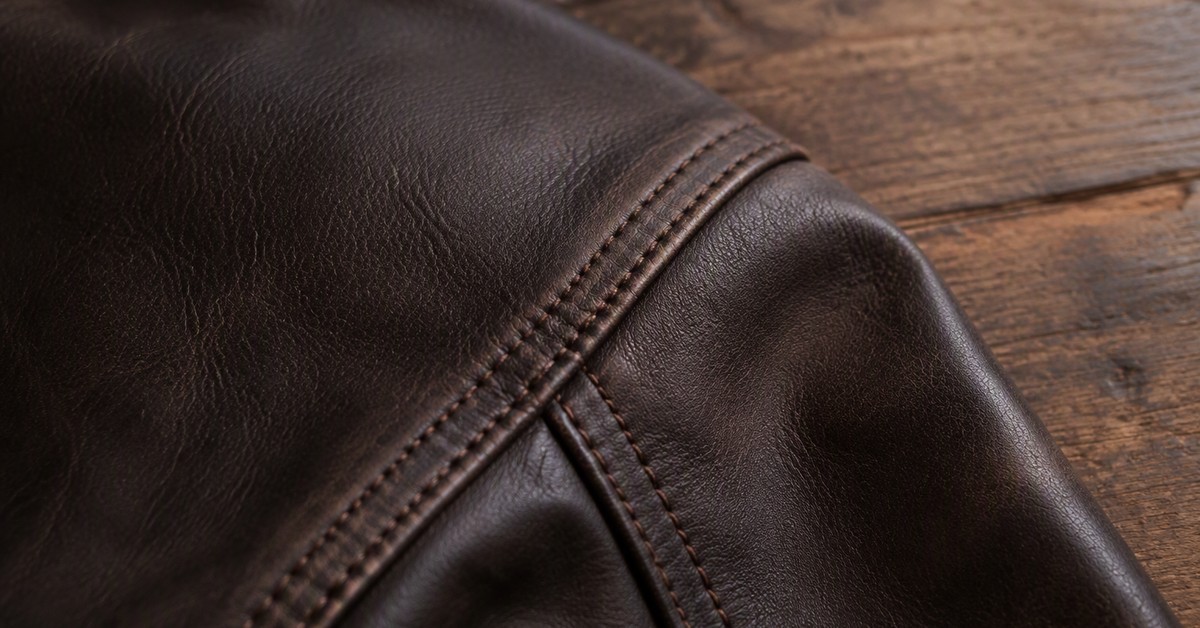
Danke, trading as Dalian Danke Fashion Co., Ltd, manufactures leather jackets for wholesale and private-label buyers. Style, material and production-location documentation for French listings can be requested at www.dankeleatherjacket.com or on WhatsApp +86 13234076432.
Does France's ultra fast fashion law cover leather jackets?
The law applies to products inside the French textile extended producer responsibility category, which lists clothing textiles, footwear and household linen. Whether a specific jacket sits inside that category depends on its material composition and on the approved scheme specification, so buyers should confirm each style with their French importer before publishing compliance statements.
Does the advertising ban apply to brands based outside France?
The core articles are drafted around operators established in France and around non-EU platforms selling into the French market. Sellers established in another EU or EEA state are carved out, subject to the cross-border procedure in the e-commerce directive. A non-French producer still needs a French authorised representative for its producer responsibility duties.
What is the penalty for breaking the advertising ban?
The law sets an administrative fine of up to EUR 100,000 for influencer promotion of ultra fast fashion, and it brings the wider advertising ban within the enforcement scope of the French consumer code authorities. Eco-contribution penalties run alongside, from EUR 0.25 to EUR 12 per product in 2026 and higher in later years.