

Rhode Island Opens PFAS Exemption Route for 2027 Textile Ban: What Leather Jacket Buyers Should Know
On October 9, 2026, the Rhode Island Department of Environmental Management published guidance setting out how manufacturers can apply for an exemption from the state's Consumer PFAS Ban Act of 2024. The Act prohibits the sale of covered products containing intentionally added PFAS from January 1, 2027, and its definition of textile expressly names leather.
For importers and private label programs selling a Leather Jacket into the United States, the useful part of the document is procedural: who may apply, what evidence an application must contain, how long an exemption lasts, and how a refusal can be appealed. The guidance does not change the prohibition or any deadline.
What Rhode Island's PFAS ban covers
Chapter 23-18.18 of the Rhode Island General Laws prohibits the manufacture, sale, offer for sale or distribution for sale in the state of any covered product containing intentionally added PFAS from January 1, 2027. Covered products include textile articles, alongside carpets and rugs, cookware, cosmetics, fabric treatments, juvenile products, ski wax and firefighting personal protective equipment.
The definition of textile is broad. It covers any item made in whole or in part from a natural, man-made or synthetic fiber, yarn or fabric, and it names leather, cotton, silk, jute, hemp, wool, viscose, nylon and polyester. Textile articles in turn cover apparel, accessories, handbags, backpacks, draperies, upholstery and bedding. A treatment for use on covered textiles or leathers is excluded.
Outdoor apparel for severe wet conditions follows a different timetable. Instead of being prohibited in 2027, it may be sold from January 1, 2029 if it carries a disclosure that it is made with PFAS chemicals.
How the exemption process works
The Department's guidance turns the exemption power added by the 2026 amendment, enacted as S 2799 on June 19, 2026, into two tests.
First, there must be no comparable product without added PFAS available at a reasonable cost. Second, at least one of four further findings must hold: the product is beneficial to the environment, it protects public health, it protects public safety, or there is no technically feasible alternative to using PFAS in it.
Only manufacturers, or organizations acting directly on a manufacturer's behalf, may apply. Requests are made by email to DEM.PFASProduct@dem.ri.gov using a specified subject line.
A complete request must describe the product and its NAICS sector, explain why PFAS is essential to the way the product functions, assess possible alternatives and the cost difference between them, document known human health and environmental effects, describe the product's end-of-life fate, and list any comparable applications made in other jurisdictions. The package must be sworn under oath and notarized.
Applications and related correspondence are public records unless the manufacturer also files a redacted public copy. An exemption is valid for no longer than five years and can be renewed, but it can be revoked for a material misrepresentation, and a holder must update the filing within 10 business days of any material change.
Enforcement and penalties
Enforcement starts with a request for evidence. Where the Department believes a covered product with intentionally added PFAS is on sale, the director may require the manufacturer to act within 30 days: either to provide a certificate attesting that the product contains none, or to notify the sellers that the sale is prohibited and give the Department their names.
Civil penalties begin with the prohibition. From January 1, 2027, a first violation carries a penalty of up to $1,000, and a second or later violation up to $5,000 for each violation. A party refused an exemption may request a hearing from the Department's Administrative Adjudication Division within 30 days.
What it means for a leather jacket program
A buyer's most useful document is a bill of materials that separates hide, lining, hardware and finishing chemistry, and that records which treatments carry any added PFAS. A specification already prepared for California's textile PFAS limits, or for federal PFAS reporting, will answer part of what an exemption file requires.
Danke, the leather garment division of Dalian Danke Fashion Co., Ltd, collects material and treatment documentation at sampling stage for OEM and private label programs rather than at shipment. The same records support range planning across the men's leather jacket collection.
An exemption is granted to a product or a category of products, not to a supplier's marketing line, so buyers should expect the underlying documentation rather than a general assurance. Current product information is published at www.dankeleatherjacket.com.
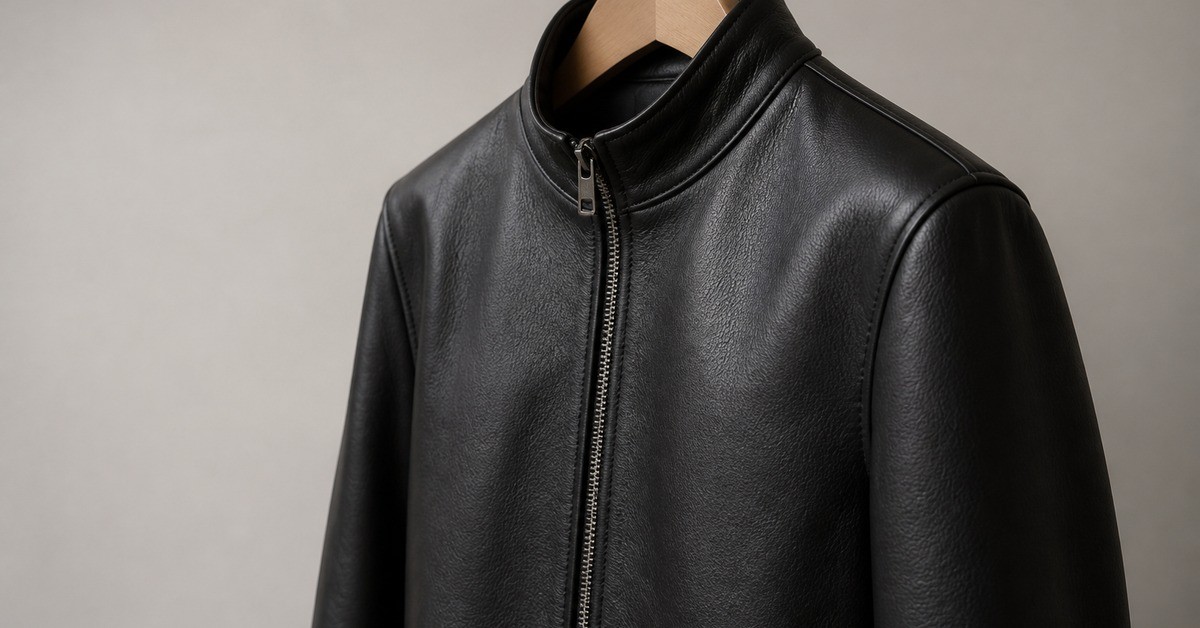
To review treatment and material documentation for an upcoming season, contact the Danke team on WhatsApp +86 13234076432.
Does Rhode Island ban leather jackets?
Not by name. The prohibition applies to covered products containing intentionally added PFAS, and textile articles are a covered product category. The statutory definition of textile expressly includes leather, and textile articles cover apparel and accessories, so a leather jacket containing intentionally added PFAS falls inside the January 1, 2027 prohibition.
When does the prohibition start?
It applies from January 1, 2027, and civil penalties begin on the same date. Outdoor apparel for severe wet conditions is handled separately and may be sold from January 1, 2029 with a disclosure that it is made with PFAS chemicals.
Can a supplier apply for an exemption?
Only a manufacturer, or an organization acting directly on a manufacturer's behalf, may file with the Department of Environmental Management. An approved exemption lasts up to five years and is renewable. The application is sworn and notarized, and it is a public record unless a redacted copy is filed with it.